Chinese Hot Pot Guide: Regional Styles, Ingredients, Dipping Sauces and How to Eat It
Explore Chinese hot pot, from Chongqing and Beijing to Chaoshan: broths, ingredients, dipping sauces, food safety, etiquette and Mandarin ordering phrases.
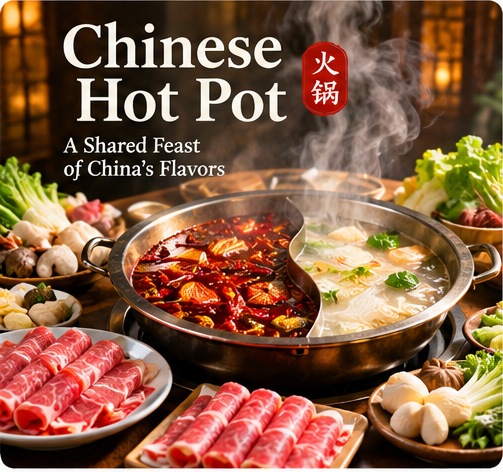
The table is crowded with thinly sliced meat, mushrooms, tofu and leafy vegetables. In the middle sits a pot of bubbling broth: one side red with chili oil and Sichuan peppercorns, the other filled with clear soup.
Someone lowers a slice of beef into the broth. Another person prepares sesame sauce. Steam rises as everyone talks across the table. Dinner has begun, but nobody is waiting for a chef to bring out a finished dish.
This is Chinese hot pot (火锅, huǒguō): not just a recipe, but a way of eating together. Diners cook ingredients in a shared pot and create their own combinations of flavor.
For a first-time visitor, the experience can be exciting and confusing. What should you order? Which ingredients go in first? How spicy is the red broth? How do you know when food is cooked? This guide explains the essentials.
What Is Chinese Hot Pot?
Chinese hot pot is a shared meal built around a heated pot of broth at the dining table. Diners select raw or partially prepared ingredients, cook them in simmering liquid and eat them with dipping sauces.
Common ingredients include thinly sliced beef, lamb and pork; seafood; tofu and soybean products; mushrooms and greens; potatoes and lotus root; noodles and specialty meatballs.
The broth may be mild, spicy, rich, herbal or intensely aromatic. Unlike a stew prepared entirely in the kitchen, hot pot is cooked throughout the meal. That shared cooking process is central to the experience.
Is Hot Pot the Same as Soup?
Not quite. Although broth matters, hot pot is primarily about cooking and eating ingredients in the pot. In some regional styles the broth is enjoyed as soup. In others, especially very oily or intensely seasoned versions, diners focus on the cooked ingredients rather than drinking the cooking liquid.
A Brief History of Chinese Hot Pot
Cooking in heated vessels has a long history in China, and shared simmering methods developed in different places over time. It would be misleading to claim that the restaurant-style hot pot familiar today was invented by one person thousands of years ago.
From Heated Vessels to Shared Meals
Historical Chinese cooking vessels included pots designed for heating food over fire. Some surviving artifacts demonstrate early approaches to heating and serving food. They illuminate the history of communal cooking, but do not establish one uninterrupted origin for every modern hot pot tradition.
The Growth of Regional Hot Pot
Regional cuisines developed different approaches based on ingredients and dining preferences. Northern traditions made extensive use of lamb and relatively simple broths. Sichuan and Chongqing developed intensely seasoned styles with chilies and Sichuan peppercorns. Guangdong traditions often emphasize fresh seafood, beef and more delicate broths.
Modern restaurant chains have spread these styles far beyond their original regions. Today hot pot is enjoyed across China and internationally.
Five Regional Chinese Hot Pot Styles Worth Knowing
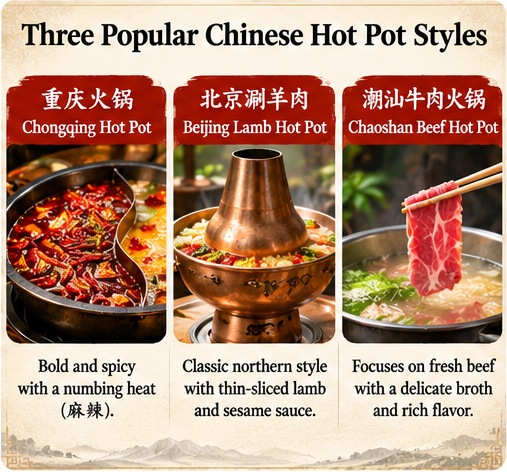
There is no single correct version of Chinese hot pot. Regional differences are part of its appeal.
1. Chongqing Hot Pot — 重庆火锅
Chongqing hot pot is famous for its red broth, chili oil, dried chilies and Sichuan peppercorns. Its signature sensation is 麻辣 (málà): 麻 (má) is the tingling or numbing sensation associated with Sichuan peppercorns, while 辣 (là) is chili heat.
Traditional Chongqing hot pot may use beef tallow as a major cooking fat. Popular ingredients include beef tripe, duck intestines, sliced meat, tofu products and vegetables.
The broth can be intensely seasoned. First-time visitors should not assume that medium spicy will feel mild. Some restaurants offer less spicy options, but the availability of a truly mild broth varies.
2. Sichuan Hot Pot — 四川火锅
Sichuan hot pot shares important flavor traditions with Chongqing styles, but the two are not completely identical. Sichuan contains diverse local traditions, and restaurant recipes vary.
Chengdu hot pot, for example, may differ in its balance of oil, spices, broth ingredients and dipping sauces. Neither Sichuan nor Chongqing hot pot has one universal recipe.
3. Beijing Copper-Pot Lamb — 北京涮羊肉
A celebrated northern tradition is 涮羊肉 (shuàn yángròu), often translated as instant-boiled lamb or mutton. It is especially associated with Beijing.
The meal is traditionally served in a copper pot, often with a central chimney. The broth is usually relatively simple, allowing the meat's flavor to stand out.
Thin lamb slices are briefly swished through the simmering liquid and dipped in a rich sauce. A classic Beijing-style sauce often combines sesame paste with fermented tofu, chive-flower sauce and other seasonings.
This experience is very different from Chongqing's chili-oil-centered meal.
4. Chaoshan Beef Hot Pot — 潮汕牛肉火锅
From eastern Guangdong, Chaoshan beef hot pot focuses on fresh beef and careful distinctions between cuts. Restaurants may offer several cuts with different textures, tenderness and fat content.
A mild broth lets the beef's flavor stand out. Thin slices are cooked briefly, often with guidance from staff about cooking time.
A popular accompaniment is 沙茶酱 (shāchájiàng), a savory sauce associated with southern Chinese cuisines. This is an excellent option for people who prefer beef flavor without intensely spicy broth.
5. Cantonese Hot Pot — 广东火锅
Cantonese hot pot includes styles emphasizing fresh ingredients and flavorful but often relatively mild broths. Seafood, chicken, mushrooms and vegetables are common.
打边炉 (dǎ biānlú) is a Cantonese expression associated with hot pot dining. Guangdong also has variations such as coconut chicken hot pot, which combines chicken with a lightly sweet coconut-based broth.
The shared cooking format can produce a very different experience from southwestern chili-heavy styles.
Understanding the Hot Pot Broth
Your first major decision is usually the soup base, or 锅底 (guōdǐ).
Spicy Red Broth — 麻辣锅
A spicy broth with chilies, Sichuan peppercorns, aromatics and often substantial cooking oil. It can be extremely hot for beginners.
Clear Broth — 清汤锅
A mild broth that may contain chicken, pork bones, mushrooms or vegetables. Recipes vary. It is a practical choice for diners who do not enjoy spicy food.
Tomato Broth — 番茄锅
A popular modern option with savory, slightly sweet tomato flavor. It is often approachable for diners who prefer milder food.
Mushroom Broth — 菌汤锅
A mushroom-forward broth with savory umami flavors. It is not necessarily vegetarian; some versions use meat stock.
Divided Pot — 鸳鸯锅
A divided pot serves two broths in one vessel, often spicy on one side and mild on the other. The name 鸳鸯锅 (yuānyāng guō) is particularly useful to remember.
A divided pot allows different preferences at the same table, but it does not guarantee strict separation of allergens or animal ingredients when utensils and serving practices are shared.
What Ingredients Should You Order?
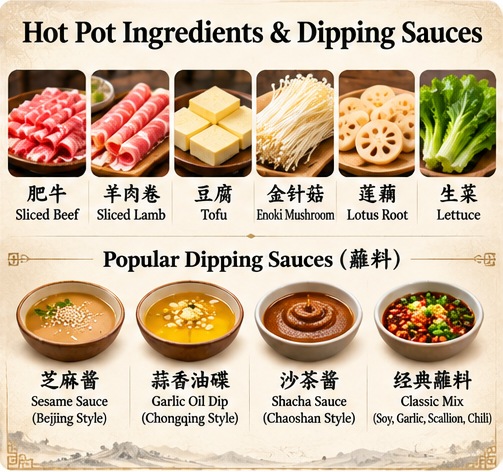
Rather than ordering everything, start with a balanced selection and add more later.
Meat
- 肥牛 (féiniú) — thinly sliced fatty beef
- 羊肉卷 (yángròu juǎn) — rolled lamb slices
- 五花肉 (wǔhuāròu) — pork belly
- 牛肉丸 (niúròu wán) — beef balls
Thin slices often cook quickly, while thicker cuts and meatballs need longer. Ask whether specialty items are raw, precooked or require specific cooking times.
Vegetables
- 生菜 (shēngcài) — lettuce
- 菠菜 (bōcài) — spinach
- 白菜 (báicài) — Chinese cabbage
- 土豆片 (tǔdòu piàn) — sliced potato
- 莲藕 (lián'ǒu) — lotus root
Leafy greens usually cook faster than dense root vegetables. Potatoes and lotus root need time to become fully cooked.
Mushrooms
- 金针菇 (jīnzhēngū) — enoki mushrooms
- 香菇 (xiānggū) — shiitake mushrooms
- 白玉菇 (báiyùgū) — white beech mushrooms
Mushrooms absorb broth flavors, but should be thoroughly cooked.
Tofu and Soybean Products
- 豆腐 (dòufu) — tofu
- 冻豆腐 (dòng dòufu) — frozen tofu
- 腐竹 (fǔzhú) — dried tofu-skin sticks
- 豆皮 (dòupí) — tofu sheets or skins
These ingredients absorb broth and provide contrasting textures.
Noodles and Starches
- 粉丝 (fěnsī) — vermicelli
- 宽粉 (kuānfěn) — wide starch noodles
- 方便面 (fāngbiànmiàn) — instant noodles
- 年糕 (niángāo) — rice cakes
Noodles are often added toward the end, though there is no universal rule. Starches can become extremely hot after absorbing broth.
How to Eat Chinese Hot Pot: A Beginner's Guide
Step 1: Choose Your Broth
If your group has different spice preferences, order a divided pot when available. A mild-and-spicy combination is a practical first experience.
Step 2: Order a Balanced Selection
For two people, start with one or two meats, two vegetables, a mushroom dish, a tofu product and a starch. Portion sizes vary; you can normally order more later.
Step 3: Prepare Your Dipping Sauce
Many restaurants have a self-service sauce station. You might combine sesame paste, soy sauce, garlic, chili oil, vinegar, sesame oil, cilantro and scallions. The best combination depends on the broth and your taste.
Step 4: Heat the Broth
Wait until the broth reaches the appropriate cooking temperature. Avoid adding too much cold food at once, which can lower the temperature.
Step 5: Cook Ingredients Thoroughly
Cooking times vary substantially. Thin meat slices may cook quickly, but thicker pieces, meatballs, seafood and dense vegetables need more time.
Do not rely on a universal rule such as ten seconds for every type of beef. Follow restaurant instructions and verify food is thoroughly cooked. Use separate utensils for raw ingredients whenever possible.
Step 6: Dip and Enjoy
Lift cooked food from the broth, let excess liquid drain and dip it in your sauce. Food taken directly from boiling broth can be extremely hot.
Step 7: Order More If Needed
The meal unfolds gradually. If you discover a favorite ingredient, order another plate. You do not need to decide everything at the beginning.
Hot Pot Dipping Sauces Explained
The dipping sauce is called 蘸料 (zhànliào). There is no single sauce used throughout China.
Beijing-Style Sesame Sauce
A northern combination may include sesame paste, fermented tofu, chive-flower sauce and other seasonings, sometimes with chili oil or cilantro. It is rich and nutty, especially with lamb.
Chongqing-Style Oil Dip
A common Chongqing-style sauce uses sesame oil and minced garlic, sometimes with additional ingredients. It provides a rich coating for ingredients taken from spicy broth, but it cannot make extremely hot food harmless.
Chaoshan-Style Shacha Sauce
Shacha sauce is savory and aromatic and commonly accompanies beef hot pot. Commercial versions may contain seafood ingredients, so people with allergies should check.
A Simple Beginner's Sauce
Try a little sesame paste, soy sauce, garlic and scallions. Taste before adding chili. Some restaurants charge separately for the sauce station.
What Is the Difference Between Hot Pot and Malatang?
火锅 (huǒguō) and 麻辣烫 (málàtàng) are related but not identical. In typical hot pot dining, people cook ingredients themselves in a shared pot.
With malatang, customers usually select ingredients that the restaurant cooks and serves in an individual bowl or portion. It is often quicker and convenient for solo dining.
冒菜 (màocài) is another related dish in which selected ingredients are cooked and served with seasoned broth or sauce. Restaurant practices vary, but the key distinction is often who cooks and how the meal is served.
Hot Pot Etiquette in China
Hot pot is social and often lively rather than formal.
Share the Pot Considerately
Do not monopolize the cooking space or take food that someone else is clearly preparing. Coordinate with the group when adding ingredients.
Use Appropriate Utensils
Use separate chopsticks or tools for raw meat when provided. Avoid touching raw food and then using the same utensils to eat cooked food.
Ask Before Adding Strong Seasonings
Extra chili or other seasonings can affect everyone sharing a broth. Ask first.
Respect Dietary Restrictions
Broths and sauces may contain meat, seafood, sesame, peanuts, soy or other allergens. A clear-looking broth is not necessarily vegetarian. Shared pots can create cross-contact risks.
Take Your Time
Hot pot meals can last a while. The shared cooking gives people time to talk, and conversation is part of the appeal.
Is Chinese Hot Pot Always Spicy?
No. Chongqing and Sichuan styles are famous internationally, but Beijing lamb, Chaoshan beef and many Cantonese styles can be relatively mild.
Ask for 不辣 (bú là), not spicy, or 微辣 (wēi là), mildly spicy. Spice levels are subjective and differ considerably by restaurant.
Can Vegetarians Enjoy Chinese Hot Pot?
Yes, with planning. Menus often include vegetables, mushrooms, tofu and noodles. But a vegetable-based meal is not necessarily vegetarian if the broth contains animal stock or the sauce contains seafood.
Ask: 有纯素锅底吗? (Yǒu chún sù guōdǐ ma?) — Do you have a vegan soup base?
If strict dietary needs matter, ask about shared utensils and preparation surfaces as well.
Food Safety: How to Enjoy Hot Pot Responsibly
Keep Raw and Cooked Foods Separate
Use dedicated utensils for raw meat and seafood when available.
Cook Meat and Seafood Thoroughly
Cooking time depends on thickness, temperature and how much food is in the pot. Use applicable food-safety temperature guidance rather than judging doneness by color alone.
Keep the Broth Sufficiently Hot
Cold ingredients lower the temperature. Allow the pot to return to an appropriate simmer.
Cook Mushrooms and Beans Properly
Some ingredients require thorough cooking and should not be treated like quickly blanched greens.
Take Care With Heat
Broth, oil, noodles and meatballs can retain very high temperatures. Let food cool before eating.
Useful Mandarin for Ordering Chinese Hot Pot
- 火锅 (huǒguō) — hot pot
- 锅底 (guōdǐ) — soup base
- 鸳鸯锅 (yuānyāng guō) — divided hot pot
- 麻辣 (málà) — numbing and spicy
- 清汤 (qīngtāng) — clear broth
- 番茄锅 (fānqié guō) — tomato broth
- 不辣 (bú là) — not spicy
- 微辣 (wēi là) — mildly spicy
- 肥牛 (féiniú) — thinly sliced fatty beef
- 羊肉卷 (yángròu juǎn) — sliced lamb rolls
- 毛肚 (máodǔ) — beef tripe
- 金针菇 (jīnzhēngū) — enoki mushrooms
- 豆腐 (dòufu) — tofu
- 蘸料 (zhànliào) — dipping sauce
- 加汤 (jiā tāng) — add broth
- 买单 (mǎidān) — pay the bill
Six Useful Sentences
- 我们想吃火锅。 (Wǒmen xiǎng chī huǒguō.) — We'd like to have hot pot.
- 可以要鸳鸯锅吗? (Kěyǐ yào yuānyāng guō ma?) — Can we have a divided pot?
- 我不太能吃辣。 (Wǒ bú tài néng chī là.) — I can't handle very spicy food.
- 这个要煮多久? (Zhège yào zhǔ duō jiǔ?) — How long should this be cooked?
- 可以加一点汤吗? (Kěyǐ jiā yìdiǎn tāng ma?) — Could you add a little more broth?
- 我们还想加一份牛肉。 (Wǒmen hái xiǎng jiā yí fèn niúròu.) — We'd like another serving of beef.
Frequently Asked Questions
What is Chinese hot pot?
A shared meal in which diners cook meat, seafood, vegetables, tofu and other ingredients in heated broth at the table.
Is Chinese hot pot always spicy?
No. Many northern and southern traditions use mild broths.
What is the best hot pot for beginners?
A divided pot with one mild and one spicy broth is often a useful introduction, where available.
What is the difference between Sichuan and Chongqing hot pot?
They share important flavors, but specific recipes, fats, spice combinations and dipping sauces vary.
What do Chinese people dip hot pot food in?
Sesame paste mixtures, sesame oil and garlic, shacha sauce, soy sauce, vinegar and chili-based combinations are all common, depending on the region.
Can you drink hot pot broth?
It depends on the style. Some mild broths are enjoyed as soup; very oily or heavily seasoned cooking broths are usually treated as cooking liquids.
Is hot pot the same as Korean barbecue?
No. Hot pot cooks food in simmering liquid; Korean barbecue generally grills food on a heated surface.
How much food should two people order?
Start with a modest selection of meat, vegetables, mushrooms, tofu and starch, then order more if needed.
Is hot pot suitable for children?
Mild hot pot may be suitable when food is properly cooked and served at a safe temperature. Adults should supervise children around the hot pot and heating equipment.
The Joy of Cooking Together
Chinese hot pot is often described through its ingredients: chilies, lamb, mushrooms, tofu and bubbling broth. But ingredients alone do not explain why it is so popular.
Instead of receiving a finished dish, everyone participates. Someone adds vegetables. Another prepares sauce. A friend reminds you the beef is ready. Someone orders another plate because the table has discovered a favorite.
The meal develops through small shared decisions. Although Chongqing, Beijing and Chaoshan flavors are very different, they share something important: the pot creates a reason to gather.
Choose a broth you enjoy, order a few ingredients, ask when something is unfamiliar and take your time. The most memorable part may be the conversation while you wait for the next piece to cook.
Further Reading
- Fuchsia Dunlop — The Food of Sichuan.
- Fuchsia Dunlop — Invitation to a Banquet.
- USDA Food Safety and Inspection Service — Safe Minimum Internal Temperature Chart.