Chinese Dumplings Explained: Jiaozi, Wontons, Potstickers and How to Eat Them
From family-made New Year jiaozi to crispy potstickers, explore Chinese dumpling history, varieties, fillings and practical Mandarin.
Chinese Dumplings Explained: Jiaozi, Wontons, Potstickers and How to Eat Them
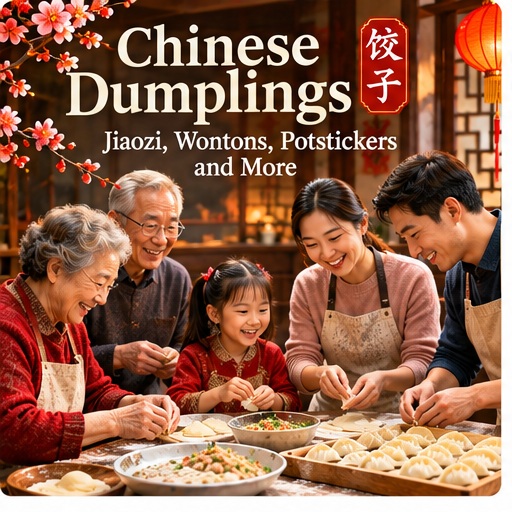
Picture a family kitchen in northern China on the afternoon before Chinese New Year. A bowl of dough sits on the table. Someone rolls small circles of pastry while another mixes pork, cabbage and seasonings. A grandparent demonstrates how to pinch the edges closed. Children attempt their own shapes, some neat, others barely holding together. Later, the dumplings will be boiled and served with vinegar, garlic or chili oil. Making dumplings is not simply preparing dinner: it is a way of spending time together.
Chinese dumplings are among the country’s most recognizable foods, but their diversity is often underestimated. A boiled northern jiaozi, a Cantonese shrimp dumpling, a bowl of wonton soup and a Shanghai soup dumpling may all be described as dumplings in English. They are not the same dish.
What Are Chinese Dumplings?
In English, dumpling is a broad culinary term. In Chinese cuisine, the familiar crescent-shaped dumpling is 饺子 (jiǎozi). Jiaozi typically consist of a thin wheat-flour wrapper folded around a savory filling, then boiled, steamed or pan-fried. Common fillings include pork and cabbage, pork and garlic chives, beef and onion, lamb and vegetables, or combinations of egg, mushrooms and vegetables.
Not every Chinese food described as a dumpling is jiaozi. Wontons, soup dumplings and Cantonese dim sum dumplings have their own wrappers, shapes, cooking techniques and culinary histories.
A Brief History of Chinese Dumplings
Dumpling-like foods have existed in China for many centuries. Archaeological evidence, written records and regional food traditions point to a long history of filled dough preparations. A popular legend attributes the invention of jiaozi to 张仲景 (Zhāng Zhòngjǐng), a physician traditionally associated with the late Eastern Han period. According to the story, he made ear-shaped parcels with warming ingredients for people suffering in winter.
The Zhang Zhongjing story is a traditional origin narrative, not proof that a single individual invented all Chinese dumplings. Their forms, names and fillings evolved across different regions and historical periods.
Why Are Dumplings Important During Chinese New Year?
For many northern Chinese families, preparing and eating jiaozi is a central New Year custom. Relatives gather to roll wrappers, mix fillings and fold dumplings, often talking together as they work. Some families eat them at midnight on New Year’s Eve or on the first day of the new year.
Certain dumpling shapes resemble historical silver ingots, 元宝 (yuánbǎo), which connects them with wishes for wealth and abundance. Festive explanations also sometimes associate 饺子 with 交子 (jiāozi), understood as the transition between time periods; this is celebratory wordplay rather than a verified etymology.
Not every Chinese household eats dumplings for New Year. They are especially prominent in northern traditions. Many southern households favor rice cakes, tangyuan, fish, chicken and other regional dishes. Family reunion matters more than a uniform national menu.
The Main Types of Chinese Dumplings
The English word dumpling covers several distinct food traditions. Understanding their differences makes Chinese restaurant menus easier to navigate.
1. Jiaozi — 饺子
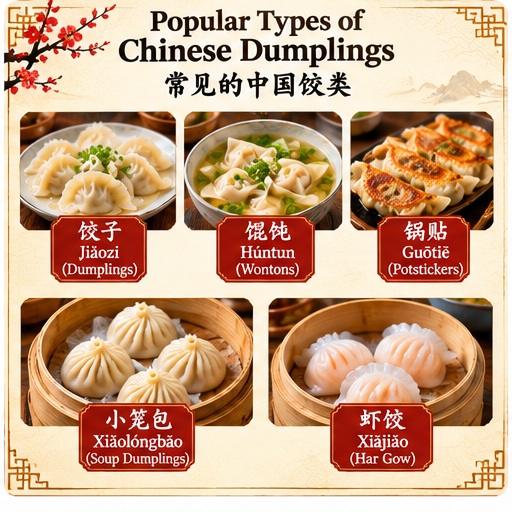
Jiaozi are classic folded dumplings associated especially with northern Chinese cuisine. Their wheat-flour wrappers surround savory fillings. They may be boiled, steamed or pan-fried, and their pleats and shapes vary by household and region.
2. Wontons — 馄饨
馄饨 (húntun), or wontons, often have thinner wrappers than jiaozi. Many are served in broth, with noodles or in seasoned sauce. Some are delicate and loosely folded; others are large and generously filled. Sichuan-style wontons called 抄手 (chāoshǒu) are often served in aromatic sauces, including chili oil.
3. Potstickers — 锅贴
锅贴 (guōtiē) are pan-fried dumplings prized for crisp golden bottoms. A common technique adds water to a hot pan and covers it so the filling steams while the bottom browns. Some regional guotie have open ends, while others are sealed. In English, potsticker can refer broadly to pan-fried jiaozi; Chinese distinctions between 锅贴 and 煎饺 depend partly on regional usage.
4. Soup Dumplings — 小笼包
小笼包 (xiǎolóngbāo) are delicate steamed filled dough parcels containing hot liquid. Associated with Jiangnan and Shanghai-area food traditions, their broth typically comes from gelatin-rich stock mixed into the filling that melts during steaming. Xiaolongbao are not ordinary jiaozi with soup poured over them: the wrapper, shape and preparation are distinctive.
5. Har Gow — 虾饺
虾饺 (xiājiǎo) are Cantonese shrimp dumplings served at dim sum. Their translucent, slightly chewy wrappers use starch-based ingredients, often including wheat starch and tapioca starch. They are steamed, and their texture is quite different from that of northern wheat-based jiaozi.
Boiled, Steamed or Pan-Fried: What’s the Difference?
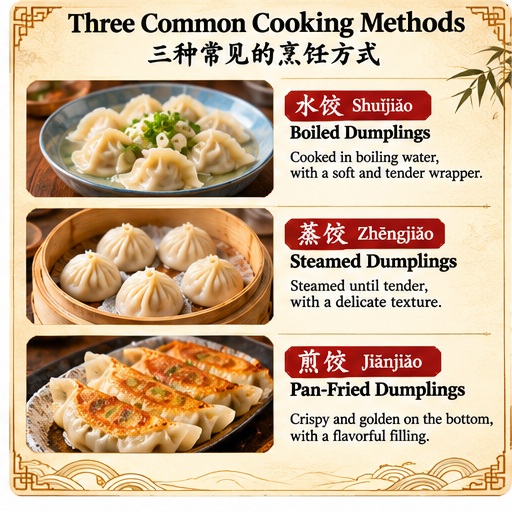
水饺 (shuǐjiǎo) are boiled dumplings with tender, soft wrappers, especially familiar in northern home cooking. 蒸饺 (zhēngjiǎo) are steamed dumplings; their texture depends on dough and filling. 煎饺 (jiānjiǎo) are pan-fried dumplings with a crisp base and softer top. A common pan-frying method combines oil, water, a lid and a final uncovered crisping stage.
No method is universally best. Boiling highlights tenderness, steaming offers a delicate texture, and pan-frying adds roasted flavor and crunch.
Popular Chinese Dumpling Fillings
猪肉白菜 (zhūròu báicài): pork and Chinese cabbage, with moisture and mild sweetness from the cabbage.
猪肉韭菜 (zhūròu jiǔcài): pork and garlic chives, a strong-flavored classic.
牛肉洋葱 (niúròu yángcōng): beef and onion, often seasoned with ginger and soy sauce.
羊肉胡萝卜 (yángròu húluóbo): lamb and carrot, familiar in parts of northern and northwestern China.
韭菜鸡蛋 (jiǔcài jīdàn): garlic chives and egg, a popular meat-free filling that may sometimes contain dried shrimp.
香菇蔬菜 (xiānggū shūcài): mushrooms and vegetables, sometimes with tofu. Check seasonings if avoiding animal products.
How Are Chinese Dumplings Made?
Step 1 — Prepare the dough: mix wheat flour and water, knead, and rest until workable. Recipes vary in hydration and water temperature.
Step 2 — Mix the filling: combine meat or vegetables with seasonings. Some vegetables are salted or squeezed to manage excess moisture.
Step 3 — Roll wrappers: divide dough into small portions and roll thin circles, often leaving the center a little thicker than the edge.
Step 4 — Fill: place a modest spoonful of filling in the center. Overfilling makes sealing difficult.
Step 5 — Fold and seal: pinch the edges firmly, with or without pleats. A secure seal matters more than decorative perfection.
Step 6 — Cook thoroughly: follow reliable food-safety guidance, particularly with raw meat. Floating alone does not guarantee a safe internal temperature.
How to Eat Chinese Dumplings
Dumplings are often eaten with chopsticks, and delicate soup dumplings may require a spoon. Common accompaniments include Chinese black vinegar (醋, cù), chili oil (辣椒油, làjiāoyóu), garlic (蒜, suàn) and soy sauce (酱油, jiàngyóu). Preferences vary by region and household.
For a beginner-friendly dipping sauce, try two parts Chinese black vinegar to one part light soy sauce, adding a little chili oil if desired. This is a practical suggestion, not a universal traditional recipe. Taste the dumplings before adding sauce.
How to Eat Xiaolongbao Without Burning Yourself
Soup dumplings contain very hot liquid. Place one on a spoon, allow it to cool, make a small opening, and carefully sip or release some broth. Eat the remaining dumpling when the temperature is comfortable. Some diners add ginger or vinegar. There is no need to rush.
Jiaozi vs. Wontons vs. Potstickers vs. Xiaolongbao
Jiaozi: usually wheat-flour wrappers; boiled, steamed or pan-fried; folded savory dumplings.
Wontons: usually thin wheat-based wrappers; often served in broth or sauce; delicate folds.
Potstickers: wheat-based wrappers; pan-fried with crisp bottoms.
Xiaolongbao: thin wheat-based wrappers; steamed with hot broth inside.
Har gow: translucent starch-based wrappers; steamed Cantonese shrimp dim sum.
Dumplings Across China
Northern China: wheat-based jiaozi and family-made boiled dumplings are particularly prominent.
Sichuan: wontons such as 红油抄手 (hóngyóu chāoshǒu) are served with fragrant chili oil and other seasonings.
Shanghai and Jiangnan: xiaolongbao and other delicate steamed preparations are important specialties.
Guangdong: dim sum includes har gow and other steamed dumplings with specialized wrappers.
Northwestern China: lamb, beef and local seasonings reflect regional food traditions.
Are Chinese Dumplings Healthy?
Dumplings can be part of a balanced diet. Nutritional value depends on the filling, portion size and cooking method. Vegetables and lean proteins can contribute nutrients; rich meat fillings, frying oil and salty dipping sauces can add fat, calories or sodium. Boiled dumplings are not automatically healthy if portions are excessive. Pairing dumplings with vegetables is one practical option.
Can Vegetarians Eat Chinese Dumplings?
Yes. Vegetable, mushroom, tofu and egg fillings are common, but check for dried shrimp, oyster sauce, meat stock and animal-based seasonings. Ask 有素馅饺子吗? (Yǒu sùxiàn jiǎozi ma?) — “Do you have vegetarian dumplings?” If you are vegan, also ask about eggs and dairy.
Useful Mandarin for Ordering Dumplings
饺子 — jiǎozi — jiaozi / dumplings; 水饺 — shuǐjiǎo — boiled dumplings; 蒸饺 — zhēngjiǎo — steamed dumplings; 煎饺 — jiānjiǎo — pan-fried dumplings.
锅贴 — guōtiē — potstickers; 馄饨 — húntun — wontons; 小笼包 — xiǎolóngbāo — soup dumplings; 虾饺 — xiājiǎo — shrimp dumplings.
馅 — xiàn — filling; 猪肉 — zhūròu — pork; 牛肉 — niúròu — beef; 羊肉 — yángròu — lamb; 韭菜 — jiǔcài — garlic chives; 醋 — cù — vinegar; 辣椒油 — làjiāoyóu — chili oil; 素馅 — sùxiàn — vegetarian filling.
Five Useful Phrases
我想要一份饺子。 Wǒ xiǎng yào yí fèn jiǎozi. — I’d like one serving of dumplings.
你们有什么馅的? Nǐmen yǒu shénme xiàn de? — What fillings do you have?
我要猪肉白菜馅的。 Wǒ yào zhūròu báicài xiàn de. — I’d like pork and cabbage filling.
可以给我一点醋吗? Kěyǐ gěi wǒ yìdiǎn cù ma? — Could I have some vinegar?
这些饺子是煮的还是煎的? Zhèxiē jiǎozi shì zhǔ de háishi jiān de? — Are these dumplings boiled or pan-fried?
Frequently Asked Questions
Are Chinese dumplings and potstickers the same? Potstickers are pan-fried dumplings, but not all dumplings are potstickers.
What is the difference between jiaozi and wontons? Jiaozi commonly have folded wheat wrappers; wontons often have thinner wrappers and are frequently served in soup.
Are soup dumplings the same as jiaozi? No. Xiaolongbao contain broth and are traditionally steamed.
Why are dumplings eaten at Chinese New Year? For many northern families, they symbolize prosperity and offer a shared activity.
Do Chinese people eat dumplings every day? Some do frequently; others eat them occasionally. Habits vary.
What is the most popular filling? Pork with cabbage or garlic chives is familiar, but there is no universal favorite.
Can dumplings be frozen? Many uncooked jiaozi freeze well when stored and cooked safely.
What sauce goes with dumplings? Black vinegar, sometimes with soy sauce, garlic or chili oil.
Are dumplings always made with wheat? No. Har gow and some other varieties use starch-based wrappers.
The Meaning of Making Dumplings Together
A restaurant can serve excellent dumplings in minutes, but making them with family is different. One person rolls wrappers, another adds filling, and everyone folds their own imperfect shapes. They may not look alike, yet they belong to the same meal. Chinese dumplings are about flour, fillings and technique, but also cooperation, memory and sharing food.
Further Reading
Fuchsia Dunlop — Invitation to a Banquet: The Story of Chinese Food.
Fuchsia Dunlop — Every Grain of Rice: Simple Chinese Home Cooking.
USDA Food Safety and Inspection Service — Safe Minimum Internal Temperature Chart.
Regional Chinese culinary museums and cultural institutions — traditional wheat foods and dumpling-making.